
In data centers and enterprise server rooms, server coolers are core components ensuring stable hardware operation. High temperatures are the "invisible killer" of electronic components; once heat dissipation fails, it can lead to anything from throttling and lag to data loss or hardware failure. Therefore, understanding the operating logic of the cooling system and mastering the correct maintenance methods is crucial for every IT operations and maintenance personnel or technology enthusiast.
Standard Operation Procedures for Server Coolers
Server cooling is not simply a matter of "installing fans"; it requires strict aerodynamic design. Its core operation procedure mainly follows the principle of "hot and cold separation," that is, constructing a clear airflow channel inside the chassis.
1. Airflow Planning Most standard rack-mount servers use horizontal or vertical airflow designs. The first step is to determine the intake direction (cold aisle) and exhaust direction (hot aisle) of the rack.
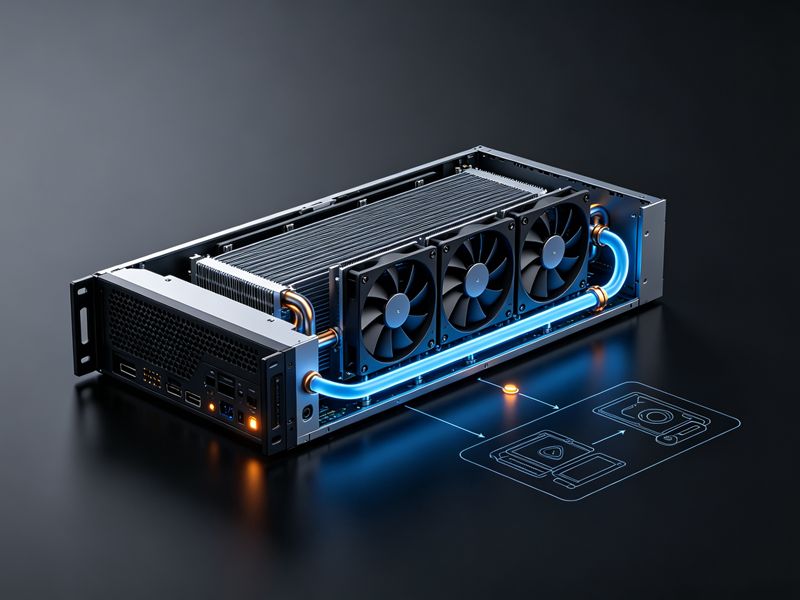
- Horizontal Airflow: Commonly found in 1U/2U servers, the fan is located at the rear. Airflow is drawn in through the front air grille, passes through heat sources such as the motherboard, CPU, and memory, and is finally exhausted by the rear fan.
- Vertical air duct: Common