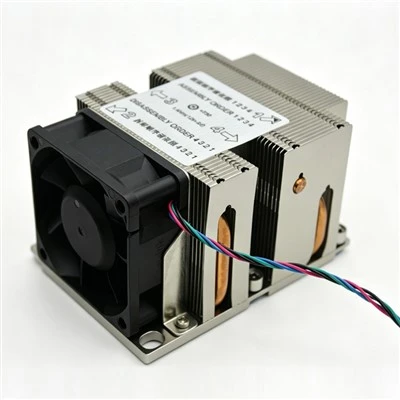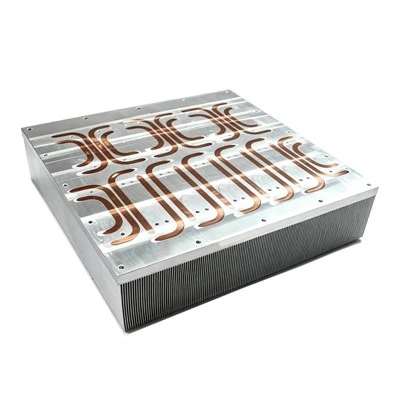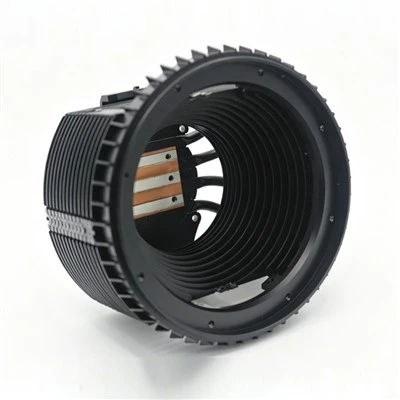


Heat pipe heat sinks are highly efficient thermal management devices characterized by unique heat dissipation properties. Specifically, they exhibit high thermal conductivity, maintaining a uniform and essentially equal temperature distribution along the axial direction between the evaporation and cooling sections.
A heat sink's thermal resistance is determined by the material's thermal conductivity and the effective surface area within its volume. For solid aluminum or copper heat sinks, once the volume reaches 0.006 m³, further increasing the volume or surface area yields no significant reduction in thermal resistance. For double-sided cooled discrete semiconductor devices, the thermal resistance of air-cooled, all-copper or all-aluminum heat sinks is limited to 0.04°C/W, whereas heat pipe heat sinks can achieve 0.01°C/W. Under natural convection cooling conditions, heat pipe heat sinks can outperform solid heat sinks by more than tenfold.