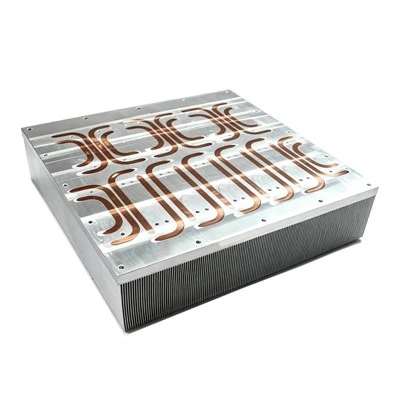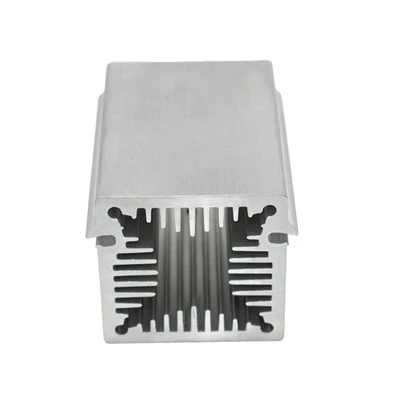



Dongguan Pioneer Thermal Technology Co., Ltd. is one of the leading manufacturers and suppliers of automotive heat sink in China. Please feel free to buy customized automotive heat sink made in China here from our factory. Welcome to contact us for quotation and free sample.
Product Description
Automotive Liquid Cold Plate Heat Sink | ADAS LiDAR & Power Module Cooling Solution
ADAS LiDAR liquid cold plate belongs to automotive high-performance liquid cooling heat sink, mostly made of aluminum alloy via vacuum brazing or friction stir welding with internal customized micro channels for coolant circulation. It directly fits laser radar chips & transceiver modules to drain concentrated heat by circulating glycol coolant, stabilizing core temp within ±3℃ amid -40℃~+85℃ harsh vehicle ambient. With outstanding uniform-temperature performance, vibration resistance and vehicle-grade leakproofness, it is core thermal component for L2~L4 autonomous driving millimeter-wave & laser radar systems.

Product Features
Custom Precision Internal Coolant Micro Channels
CNC deep-milled internal flow pathways tailored to match heat hotspot layouts of LiDAR chips and transceiver assemblies. Optimized channel width, depth and routing maximize turbulent coolant flow for superior heat exchange efficiency, eliminating localized overheating on dense sensor PCB layouts.
Dual Sealing Technology: FSW & Vacuum Brazing Options
Two industrial hermetic sealing processes available: friction stir welding creates seamless, void-free bonded joints without filler metal; vacuum brazing delivers uniform structural integrity for complex multi-layer plate designs. Both methods guarantee zero fluid seepage under vehicle vibration and thermal cycling.
Vehicle-Grade Aluminum Alloy Substrate
High-strength lightweight automotive aluminum alloy base balances high thermal conductivity and structural rigidity. Far lighter than solid copper cold plates to reduce overall vehicle curb weight, critical for EV and autonomous driving platform weight optimization.
Integrated Quick-Connect Coolant Nozzle Ports
Precision-machined threaded liquid inlet/outlet nozzles pre-installed for direct hose connection to vehicle cooling loops. Robust nozzle base structure resists pressure surges and road-induced vibration loosening during long-distance driving.
High-Precision Mounting Bosses & Positioning Datums
Tapped mounting studs, alignment pillars and perimeter flange holes machined to micron tolerances for perfect flush mating with LiDAR housings and circuit modules. Flat contact base minimizes thermal interface resistance between cold plate and heat-generating chips.
Corrosion-Resistant Passivation Surface Finish
Post-welding chemical passivation treatment forms a protective oxide layer against coolant erosion, road salt, moisture and temperature swings; optional conductive or insulating anodization for specialized EMC automotive requirements.
Technical Specifications
|
Parameter Category |
Standard Automotive Grade Spec |
Fully Custom Tunable Range |
|
Base Material |
6061-T6/6063-T5 automotive aluminum alloy |
Copper-aluminum hybrid composite available |
|
Sealing Process |
Friction Stir Welding (FSW)/Vacuum Brazing |
Single or dual layer plate construction |
|
Internal Channel Size |
Standard 3–6mm flow channels |
1.5mm–10mm custom micro/macro channel routing |
|
Operating Ambient Temp Range |
-40°C ~ +85°C |
Extended -55°C to +125°C for heavy-duty commercial vehicles |
|
Temperature Stability |
Core component temp controlled within ±3°C |
±1°C precision tuning for high-end L4 LiDAR |
|
Coolant Compatibility |
Ethylene glycol automotive antifreeze |
Deionized water, specialized low-freeze coolant blends |
|
Working Pressure Rating |
1.2 MPa max continuous operating pressure |
Up to 2.0 MPa reinforced pressure build for performance EVs |
|
Vibration Resistance |
ISO 16750 automotive vibration certified |
Shock load rated to 50G vertical/horizontal impact |
|
Dimensional Flatness Tolerance |
±0.02mm over full plate footprint |
±0.01mm ultra-precision for compact mini LiDAR units |
|
Overall Plate Dimensions |
Standard LiDAR module footprints |
50×50mm mini up to 600×400mm large power unit plates |
Advantages
Superior Hermetic Sealing & Zero-Leak Vehicle Durability
Our in-house FSW equipment produces monolithic bonded joints with no weak filler gaps common to cheap soldered cold plates. Every unit undergoes helium leak testing to detect micro-seams, delivering 10+ years leak-proof service life-far exceeding generic brazed-only alternatives prone to coolant seepage under repeated heat cycling.
Optimized Thermal Uniformity For Precision LiDAR Performance
Custom channel mapping targets exact chip hotspot zones, spreading heat evenly across the entire contact surface. Stable sensor temperatures prevent laser wavelength drift and signal distortion, a critical edge for high-accuracy autonomous driving perception systems vs basic straight-channel cold plate competitors.
End-To-End In-House Manufacturing Control
Full production workflow managed internally: aluminum blank cutting → CNC precision channel milling → FSW/vacuum brazing sealing → nozzle machining → tapping & post-processing → leak/thermal/vibration validation. No outsourced subcontracting enables tighter tolerance control, faster OEM prototype turnaround and transparent bulk pricing for automotive tier 1 suppliers.
Lightweight Weight Savings Without Cooling Compromise
Aluminum alloy construction cuts component weight by ~60% compared to equivalent copper liquid cold plates, supporting EV range extension and lightweight ADAS module packaging while retaining robust heat transfer capacity for high-wattage LiDAR and radar hardware.
100% Tier 1 Automotive Customization Support
Thermal engineering team provides free CFD thermal simulation to refine channel layouts pre-production. Modify plate thickness, nozzle placement, mounting hole patterns and surface coatings to match exact LiDAR, OBC, inverter or compute module designs. Small prototype batches to mass-volume tier 1 OEM production runs supported.
Full Automotive Compliance Certification Pathway
All production aligned with ISO 16750, IP67 moisture resistance and AEC-Q100 vehicle-grade standards. Complete test documentation, batch traceability and quality inspection reports supplied for automotive manufacturer homologation processes.
Applications
L2/L3/L4 Autonomous Driving ADAS LiDAR Laser Radar Systems.
Millimeter-Wave Radar Sensor Liquid Cooling Assemblies.
EV On-Board Chargers (OBC) & Traction Inverter Power Modules.
Automotive Central Compute Platforms & Domain Controller PCBs.
Electric Vehicle Battery Management System (BMS) High-Power Boards.
Commercial Truck & Heavy Machinery ADAS Perception Hardware.
Automotive LED Headlight & High-Power Lighting Driver Units.
Manufacturing & Fabrication Workflow
1. Aluminum Raw Material Preparation & CNC Milling
Automotive-grade aluminum alloy sheets are precision blanked, then 5-axis CNC milled to carve intricate internal coolant micro channels, mounting bosses, flange profiles and nozzle seat cutouts with micron-level dimensional accuracy.
2. Hermetic Sealing Via FSW Or Vacuum Brazing
Option 1 (Friction Stir Welding): Robotic FSW machinery fuses cover plates to base plates into a single solid aluminum structure with no secondary filler material, ideal for high-pressure leak-critical LiDAR units.
Option 2 (Vacuum Brazing): Multi-layer assemblies are stacked with brazing foil, heated inside vacuum furnaces to form uniform bonded joints for complex stacked channel architectures.
3. Nozzle Integration & Precision Secondary Machining
Liquid inlet/outlet nozzles are press-fitted and sealed; secondary CNC tapping finishes all mounting holes and alignment datums to guarantee perfect assembly fit with customer LiDAR housings.
4. Surface Treatment & Corrosion Protection
Parts undergo alkaline cleaning, chemical passivation, with optional hard anodization or conductive plating for EMC shielding requirements.
5. Multi-Stage Automotive-Grade Quality Testing
Each cold plate passes rigorous validation: helium leak detection, pressure burst testing, thermal resistance measurement, ISO 16750 vibration cycling, flatness inspection and dimensional metrology before packaging. We ship globally to automotive tier 1 manufacturers, autonomous tech startups and EV component suppliers.
Hot Tags: automotive heat sink, China automotive heat sink manufacturers, suppliers, factory, Automotive Heat Sink, Chip Heat Sink, Heat Sink Inverter, thermal solutions