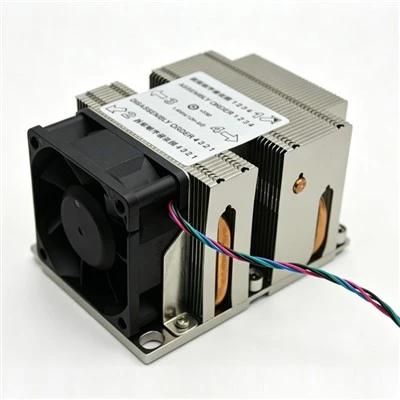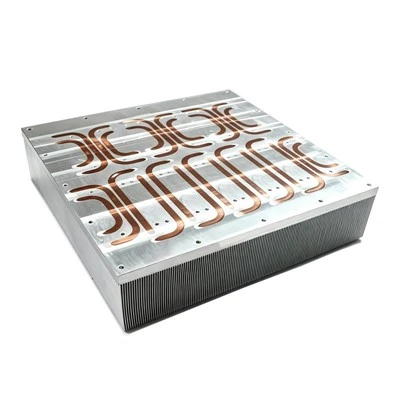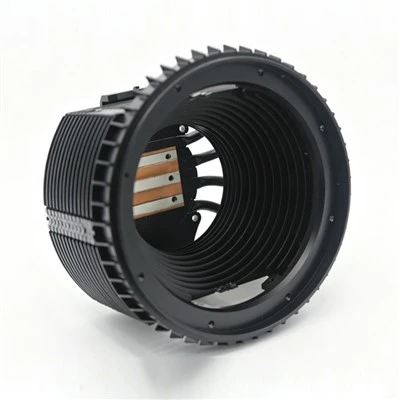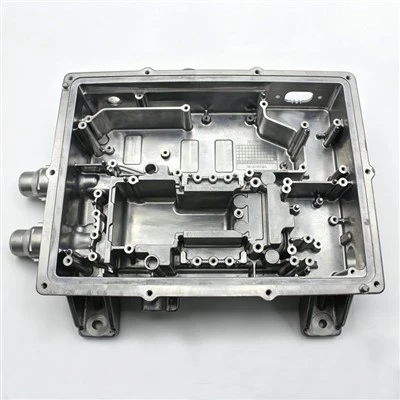

In outdoor equipment and industrial applications, some air-cooled heat sinks must not only meet thermal performance requirements but also possess a certain degree of water resistance to adapt to complex operating environments.
For air-cooled heat sinks featuring sealed cavities or internal channels, the quality of the seals at interfaces and connection points directly influences the product's protective performance. Any leakage at these locations could allow external moisture to penetrate the interior of the unit.
Consequently, air leakage testing serves as a vital method for evaluating the sealing integrity of such products. It helps identify potential leaks, providing a basis for quality control to ensure the product meets IP65-level protection standards.

1. Why does air-cooled radiator need to be tested for air tightness?
For air-cooled radiators with a sealed structure, the product's interfaces, welding parts and other sealed connection locations need to meet corresponding sealing requirements.
If defects occur during processing or connection, a channel may be formed for gas or moisture to enter the interior of the product, affecting the protective performance of the product.
Through the air tightness test, you can check whether there are signs of leakage at these key locations, discover potential sealing problems in a timely manner, and reduce the risk of water intrusion in subsequent use.
2. How is an airtightness test performed on an air-cooled heatsink?
During the production inspection process, a specialized airtightness test fixture is typically used to secure the product, allowing for the detection of leaks at sealed areas through the observation of air bubbles.
The specific test procedure is as follows:
1. Secure the product: Place the heatsink onto the specialized airtightness test fixture and clamp it firmly in place.
2. Apply water: Evenly apply water to the interfaces or connection points that require inspection.
3. Inject air: Introduce compressed air into the product according to the established test parameters.
4. Observe for bubbles: Check the areas where water was applied for the appearance of persistent air bubbles, which indicates potential leak locations.
If a leak exists at a sealed location, the internal compressed air will escape through the defect, forming bubbles in the areas where water has been applied. Observing these bubbles helps determine whether the product has any potential sealing issues.
3. What is the significance of leak testing for product quality?
| Inspection Focus | Primary Purpose |
| Interface Seal Integrity | Verify the absence of leakage at mating interfaces |
| Connection Integrity | Detect sealing defects at joint/connection areas |
| Waterproofing Design Validation | Identify leakage paths that may permit water ingress |
| Production Quality Control | Serve as a basis for seal performance verification during manufacturing |
Air tightness testing is mainly used to check the sealing performance of products. For products with IP65 protection requirements, corresponding dustproof and waterproof tests must be conducted in accordance with applicable standards. It cannot be judged that they have reached the IP65 level based on the air tightness test results alone.
4. Frequently Asked Questions (FAQ)
Q1: Do all air-cooled heat sinks require an airtightness (leak) test?
No. Standard air-cooled heat sinks with an open or solid design typically lack internal cavities that require sealing. Whether an airtightness test is necessary depends on the product's structural design and its specific ingress protection requirements.
Q2: Why does an airtightness test involve observing air bubbles?
If a leak exists at a specific location and the test conditions are met, gas may escape from that point, forming air bubbles. Consequently, observing these bubbles helps identify potential leak sites.
Q3: Does passing an airtightness test mean a product meets the IP65 standard?
Not necessarily. An airtightness test primarily checks for leaks in a sealed structure, whereas the IP65 rating must be verified through specific dust and water ingress testing. The objectives and methodologies for these two types of evaluations are different.
Conclusion
For air-cooled heat sinks featuring a sealed structure and requiring water resistance, leak testing serves as a critical quality control measure during production.
By verifying the integrity of seals at product interfaces and connection points, potential leaks can be identified, thereby reducing the risk of moisture ingress and ensuring the product meets IP65-rated protection standards.