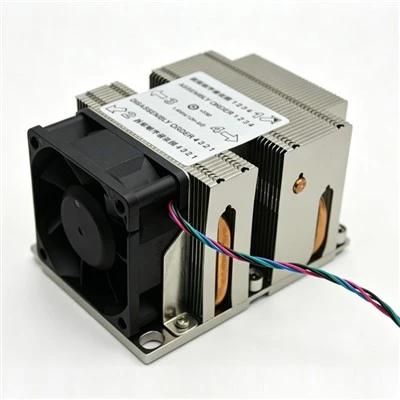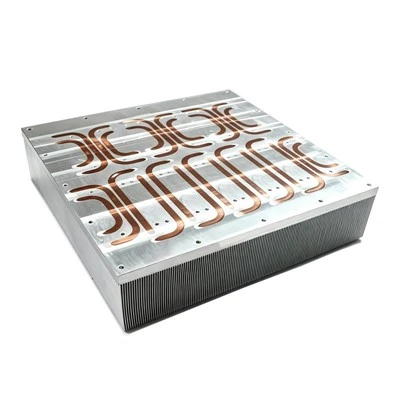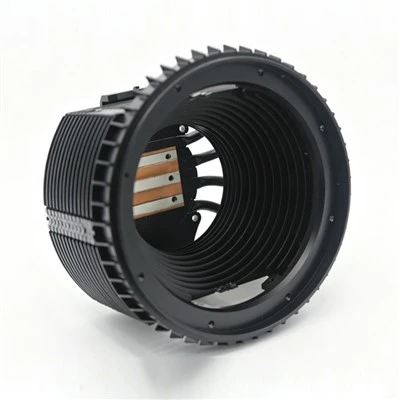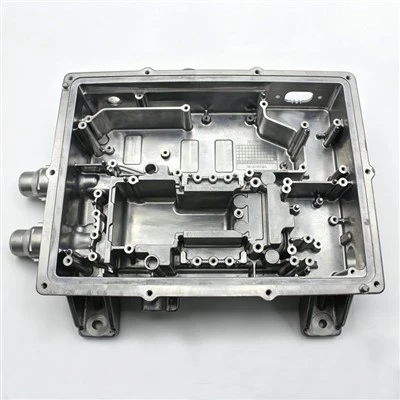


Cleanliness is not merely an external quality requirement for liquid cold plates; it is a critical factor that directly impacts fluid flow, heat transfer performance, and long-term operational reliability.
During machining, welding, and assembly, liquid cold plates can retain contaminants such as metal particles, cutting fluids, and brazing flux. Even when a product looks clean on the outside, these residues may remain trapped inside the internal flow channels, obstructing normal coolant circulation.

1. Where Do Contaminants in Liquid Cold Plates Come From?
Common contaminants primarily originate from the manufacturing and processing stages:
| Contaminant | Primary Source | Potential Impact |
| Metal Chips & Particles | CNC machining, drilling | Clogs flow channels and restricts coolant flow rate |
| Flux Residues | Welding, brazing | Increases chemical residue and corrosion risks |
| Cutting Fluids & Oils | Mechanical machining | Leaves internal oily films and hydrocarbon residues |
| Ionic Residues | Cleaning, rinsing | Compromises coolant stability and material compatibility |
2. How Does Insufficient Cleanliness Impact Thermal Performance?
The impact is primarily reflected in three key areas:
2. 1 Particle Clogging of Flow Channels
Metal chips and other particles can accumulate inside internal flow channels, reducing the effective cross-sectional flow area and altering coolant flow distribution. In severe cases, this leads to localized blockages and insufficient cooling.
2. 2 Surface Residues Impairing Heat Transfer
Cutting fluids, oils, and other residues can adhere to internal surfaces, altering surface conditions and wetting characteristics, which compromises direct contact between the coolant and the metal wall.
2. 3 Chemical Residues Increasing Corrosion Risks
Certain flux and soluble ionic residues can interact adversely with the coolant or metallic materials, increasing the risk of localized corrosion and compromising long-term operational reliability.
3. Why Do Microchannel Cold Plates Require Stricter Cleanliness Control?
Microchannel cold plates feature significantly smaller internal flow passages, making them far more sensitive to particulate contamination.
When particles enter these narrow channels, they can cause localized deposition, increased flow resistance, and even complete blockages. Therefore, cleanliness requirements must comprehensively account for the following factors:
3.1 Minimum Channel Dimensions: Establish particle size control limits based on the smallest channel geometry.
3.2 Particle Size and Count: Focus not only on the maximum allowable particle size, but also on the overall particle count distribution.
3.3 Filtration Capability: Ensure the system-level filtration solution aligns with the cold plate's cleanliness specifications.
3.4 Operating Conditions: Account for gradual contaminant accumulation over long-term continuous operation.
Particle limits should not be determined by applying a single, uniform value; instead, they must be defined based on the specific cold plate structure, coolant type, and actual application requirements.
4. How to Establish Cleanliness Control Standards for Liquid Cold Plates?
Effective cleanliness management cannot rely solely on simple flushing; it requires clearly defined inspection items and acceptance criteria.
| Inspection Item | Primary Testing Scope |
| Particulate Cleanliness | Particle size, count, and distribution |
| Ionic Residues | Soluble ions and chemical residues |
| Oil & Hydrocarbon Residues | Cutting fluids, lubricants, and organic contaminants |
Particulate testing can reference the technical cleanliness inspection methods outlined in ISO 16232 and VDA 19.1, whereas ionic and oil residues require dedicated, independent testing methods.
Throughout the manufacturing process, strict control should also be maintained across the following key stages:
• Machining: Minimize residues such as metal chips and cutting fluids.
• Cleaning: Thoroughly remove particles, oils, and soluble contaminants.
• Assembly: Prevent dust and airborne particles from entering internal flow channels.
• Shipping: Perform cleanliness inspections in accordance with product specifications, and ensure proper port protection and packaging.
5. Frequently Asked Questions (FAQ)
5.1 Is simply flushing a liquid cold plate enough to ensure cleanliness?
Not necessarily. Visual cleanliness does not guarantee the absence of internal particles, oil films, or ionic residues. Proper testing methods are required to verify internal cleanliness.
5.2 Why are microchannel cold plates more vulnerable to particulate contamination?
Because of their smaller internal flow passages, particles are much more likely to cause localized deposition or blockages, directly obstructing coolant circulation.
5.3 Are ISO 16232 and VDA 19.1 mandatory standards for liquid cold plates?
They serve as reference methods for technical particulate cleanliness testing, rather than defining universal acceptance limits for all liquid cold plates. Specific cleanliness requirements should be established based on the product design and customer specifications.
Conclusion
The thermal performance of a liquid cold plate depends not only on flow channel design and heat transfer geometry, but also closely on its internal cleanliness. Establishing clear, verifiable cleanliness control requirements-from machining and cleaning to assembly and final shipping inspection-helps minimize channel blockages, chemical contamination, and long-term operational risks. Cleanliness is not an optional add-on; it is a fundamental requirement for achieving stable, reliable heat dissipation in liquid cold plates.