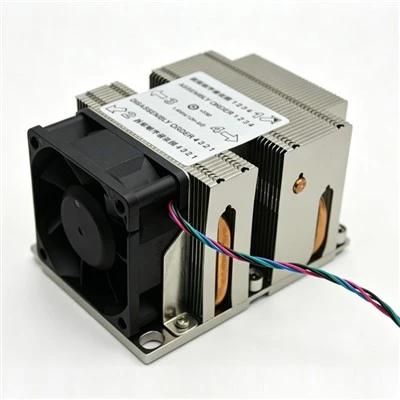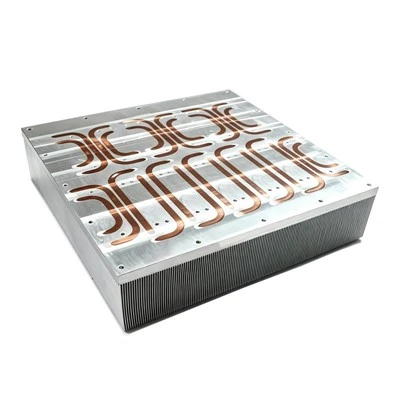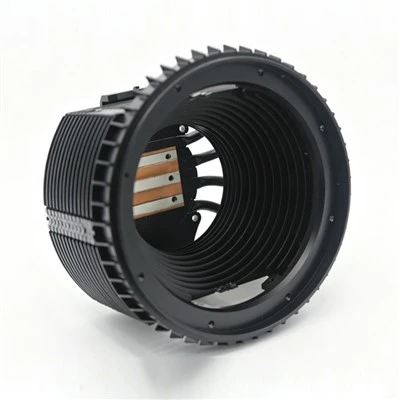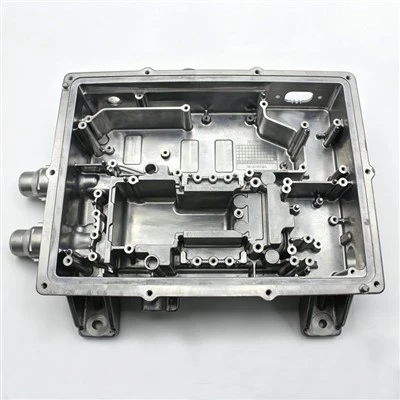

As the power requirements for AI servers and GPUs continue to rise, effectively controlling chip temperatures has become a critical challenge in the design of liquid cooling systems.
In practical applications, cooling performance depends not only on the cold plate itself but also on factors such as the chip package, thermal interface materials, coolant flow rate, and the entire cooling circuit. Even if a high-performance cold plate is used, the overall cooling effectiveness may still be suboptimal if other components in the heat transfer path act as bottlenecks.

I. What is a Thermal Resistance Budget?
Thermal resistance is a measure of the difficulty with which heat passes through a given component or interface. For a constant heat load, a higher thermal resistance typically results in a larger temperature difference across that component.
In a GPU liquid-cooling system, heat must traverse several stages-including the chip package, thermal interface material (TIM), the cold plate substrate, and the heat-exchange surfaces within the cold plate-to move from the chip to the coolant.
A "thermal resistance budget" involves evaluating the total allowable temperature difference across the entire heat-transfer path-based on the chip's maximum permitted temperature and the coolant temperature-and then allocating thermal performance requirements among the various components.
In simple terms, it helps engineers determine where heat flow is being restricted and which areas should be prioritized for thermal improvement.
II. What factors affect the cooling performance of GPU liquid cooling systems?
| Key Factors | Impact on Heat Dissipation |
| Thermal Interface Material (TIM) | Material properties, thickness, and contact conditions influence heat transfer between the chip and the cold plate. |
| Cold Plate Substrate | Materials and structural design affect the transfer and distribution of heat toward the heat-exchange zones. |
| Internal Flow Channel Structure | These factors influence heat-exchange capacity, coolant distribution, and flow resistance. |
| Coolant Flow Rate and Inlet Temperature | They also determine the heat-exchange conditions of the cold plate and the final operating temperature of the device. |
| Overall Cooling Loop | Components such as pumps, piping, and manifolds collectively dictate the flow rate and pressure conditions of the system. |
For example, if the contact between the chip and the cold plate is suboptimal, the cold plate-despite its high heat-transfer capacity-will fail to perform to its full potential.
Similarly, while increasing the coolant flow rate may enhance heat transfer, it can also lead to a higher pressure drop and increased energy consumption for pumping. Therefore, thermal management design requires a holistic approach that considers all components, rather than focusing exclusively on a single metric.
III. How to Optimize Cold Plate Design Based on Thermal Resistance Analysis?
The selection of a cold plate should be based on specific application requirements, rather than simply choosing the structure with the highest heat transfer capacity.
1. Define thermal loads and temperature requirements. Determine the amount of heat to be removed, the allowable chip temperature, and the coolant inlet temperature.
2. Evaluate flow rate and pressure drop. Ensure that the cold plate can operate within the flow and pressure constraints of the system.
3. Analyze primary heat transfer limitations. Identify whether the bottleneck stems from the thermal interface, heat spreading within the base plate, or heat transfer inside the cold plate.
4. Validate the design. Use thermal performance and pressure drop testing to confirm that the design meets actual operational requirements.
Microchannel cold plates are suitable for applications requiring high heat transfer capacity, while skived-fin cold plates offer flexibility to meet diverse cooling needs through specific fin structure designs. The final selection should be based on a comprehensive assessment of thermal load, space constraints, pressure drop, manufacturing costs, and reliability.
If the primary limitation lies in the internal heat transfer of the cold plate, the flow channel or fin structure can be further optimized; if the main issue stems from the thermal interface, priority should be given to reviewing material selection and assembly conditions.
4. Frequently Asked Questions (FAQ)
1. What is the thermal resistance budget in GPU liquid cooling?
Thermal resistance budget is a method to analyze the entire heat transfer path from chip to coolant. It is used to evaluate the temperature difference contribution of each link and determine the parts that need priority optimization.
2. The stronger the heat exchange capacity of the cold plate, the lower the GPU temperature?
uncertain. The final temperature is also affected by the thermal interface, chip packaging, coolant inlet temperature, flow rate, and system operating conditions.
3. Can increasing coolant flow improve heat dissipation?
In many designs, increasing flow can enhance heat transfer, but may also increase pressure drop and pumping energy consumption. The actual effect depends on the cold plate structure and the entire cooling circuit.
4. Is microchannel cold plate better than shovel tooth cold plate?
uncertain. Microchannels and shovel tooth cold plates each have applicable conditions. Heat exchange capacity, pressure drop, manufacturing feasibility, coolant management and long-term reliability should be comprehensively evaluated when selecting.
5. Summary
GPU liquid cooling is a systematic project. Chip packaging, thermal interface, cold plate structure and coolant operating conditions jointly affect the final heat dissipation performance.
Thermal resistance budget can help engineers identify the main limitations in the heat transfer process, so as to optimize the design more specifically.
Reasonable cold plate design not only improves local heat transfer capacity, but also ensures that the entire heat transfer path meets temperature requirements while taking into account pressure drop, cost and long-term operational reliability.